Our history
What started in 1888 as a small blacksmith shop in George, Iowa has grown into a full-scale manufacturing operation. Here’s a quick look back at where we started and how we’ve continued to build forward.
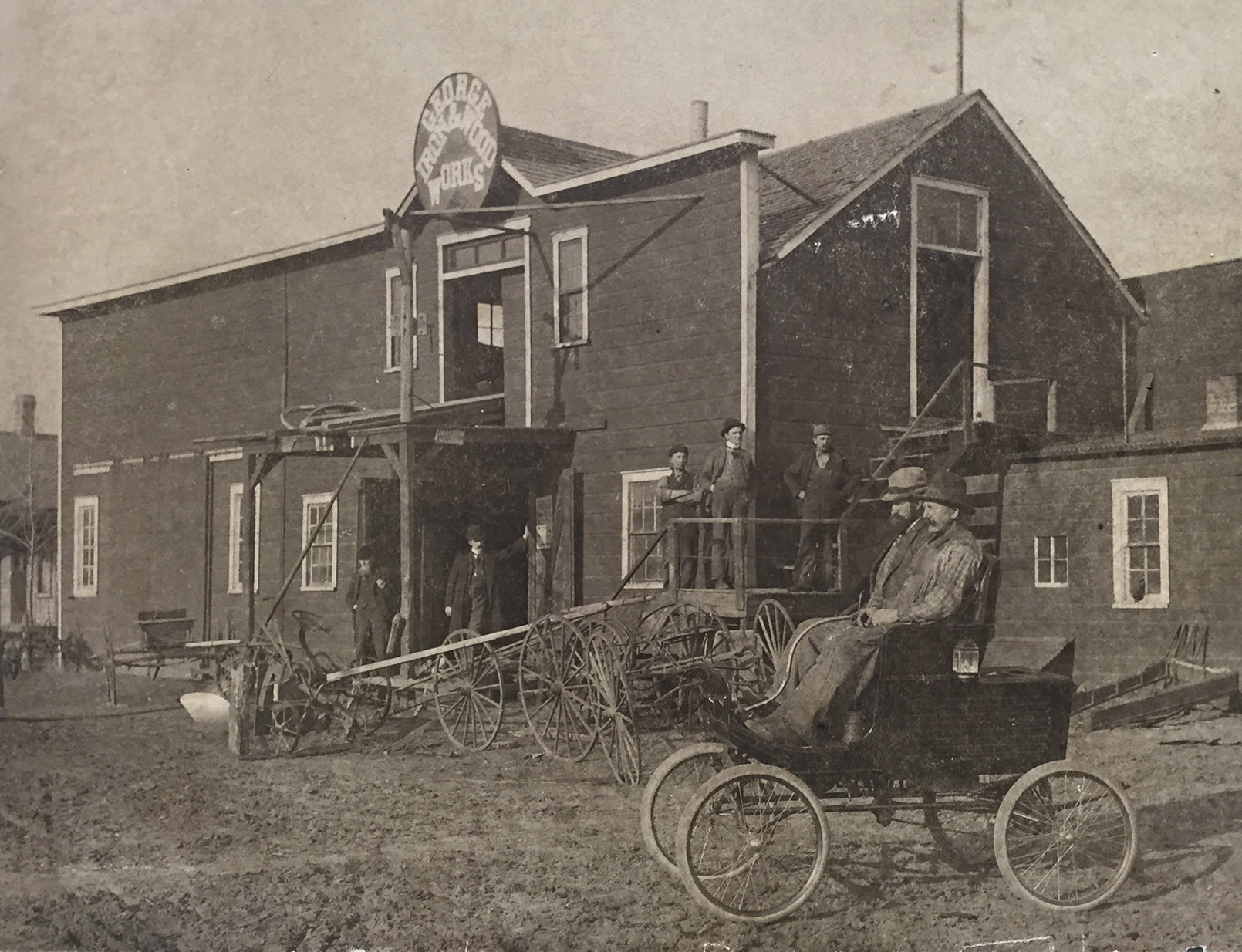
Pictured is the original Sudenga blacksmith shop in George, Iowa, where the business first took shape as George Iron and Woodworks.
Blacksmith Roots
1882–1900
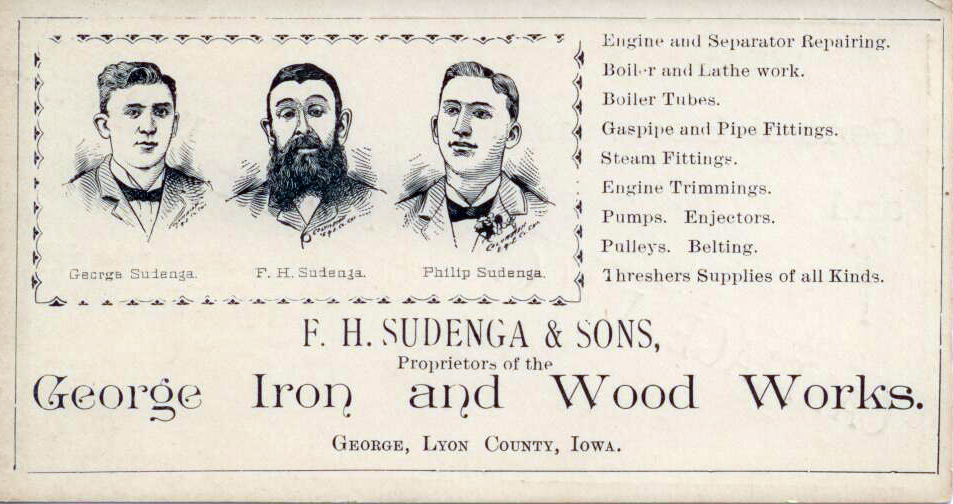
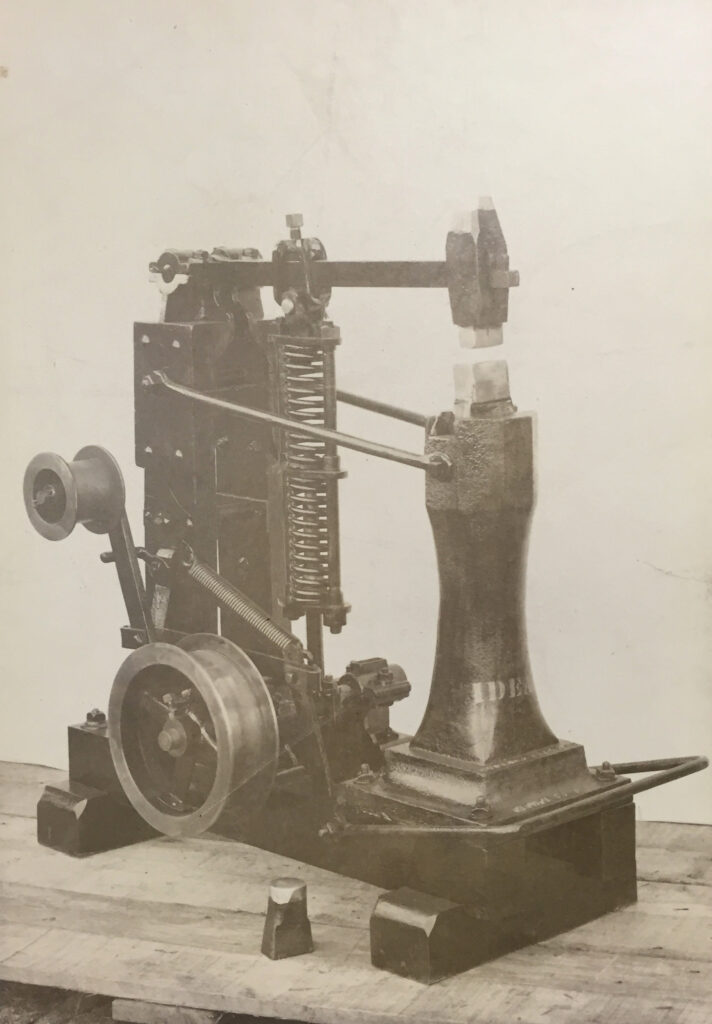
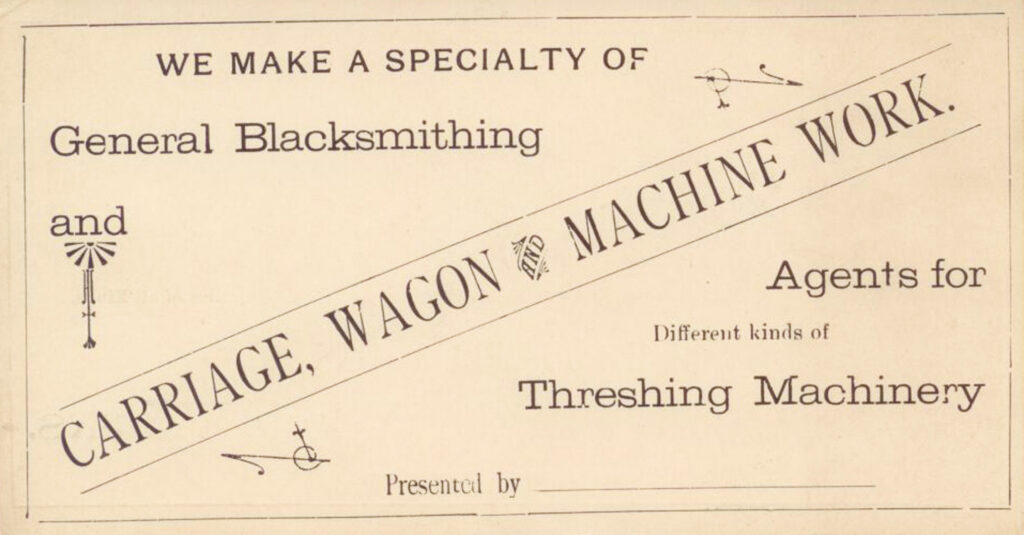
Sudenga’s story begins before the business itself. In 1882, Folkert Sudenga and his family immigrated from Germany and settled in Illinois, where they operated a blacksmith shop. A few years later, in 1886, they moved to northwest Iowa and settled in George, where in 1888 Folkert opened a blacksmith shop on Main Street called George Iron and Woodworks, serving the area with horseshoeing and wagon repair. What started as George’s first smith shop quickly earned a reputation for reliability and ingenuity, shaped by the needs of the people it served. That hands-on approach led from repair into creation, and by 1898, Sudenga produced a trip hammer, the first manufactured product in George, marking the shift toward building equipment designed to solve problems.
- Roots trace back to 1882 with a family blacksmith shop in Illinois
- Established in George, Iowa in 1888 as George Iron and Woodworks
- Early focus on horseshoeing and wagon repair
Growth & Transition
1900–1945
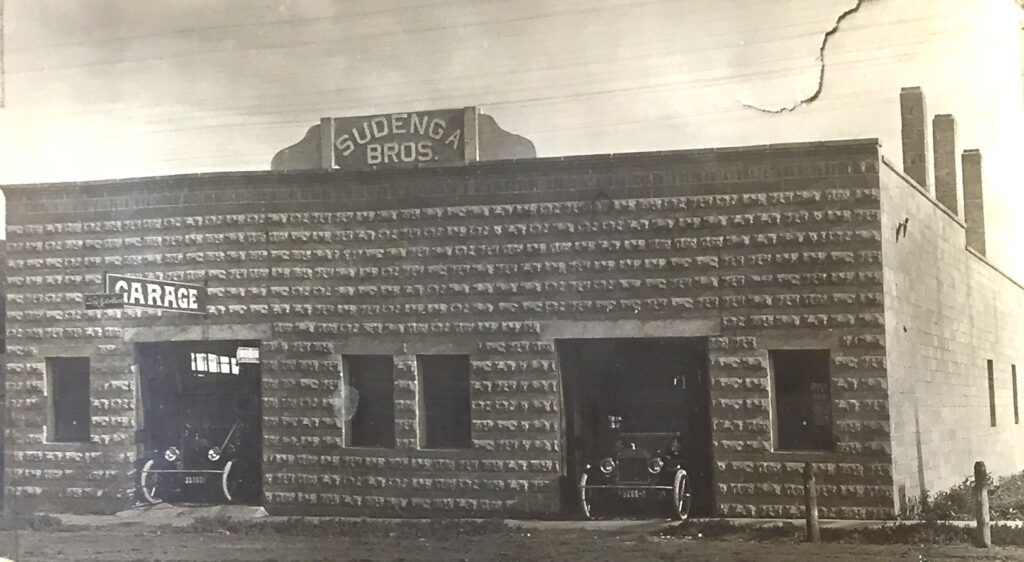
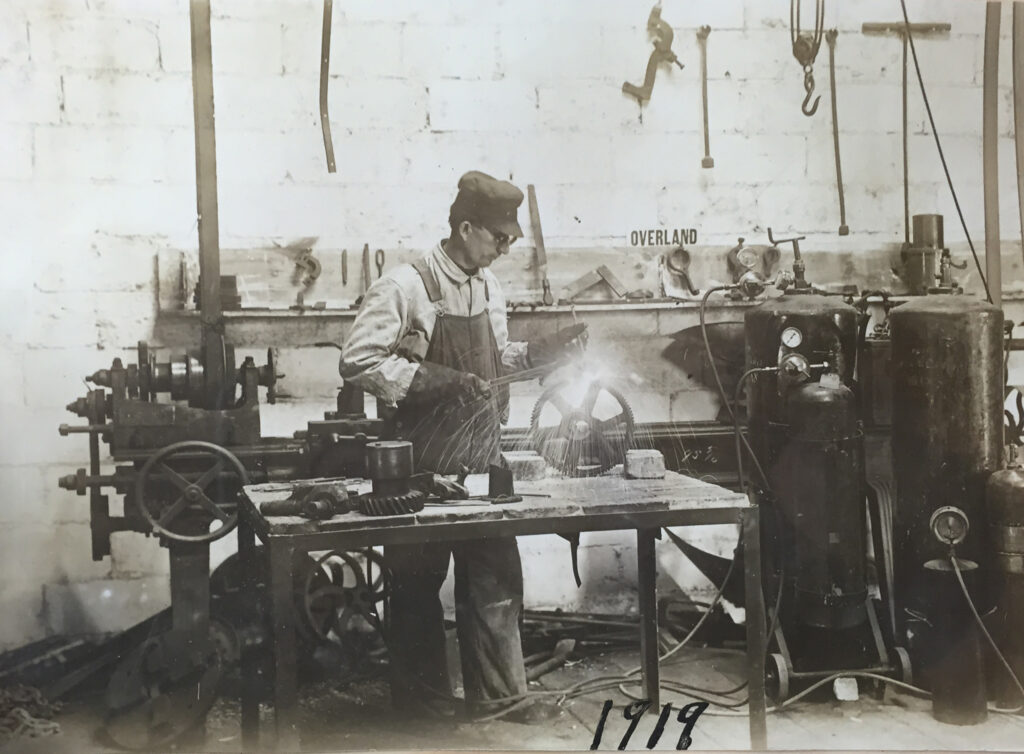
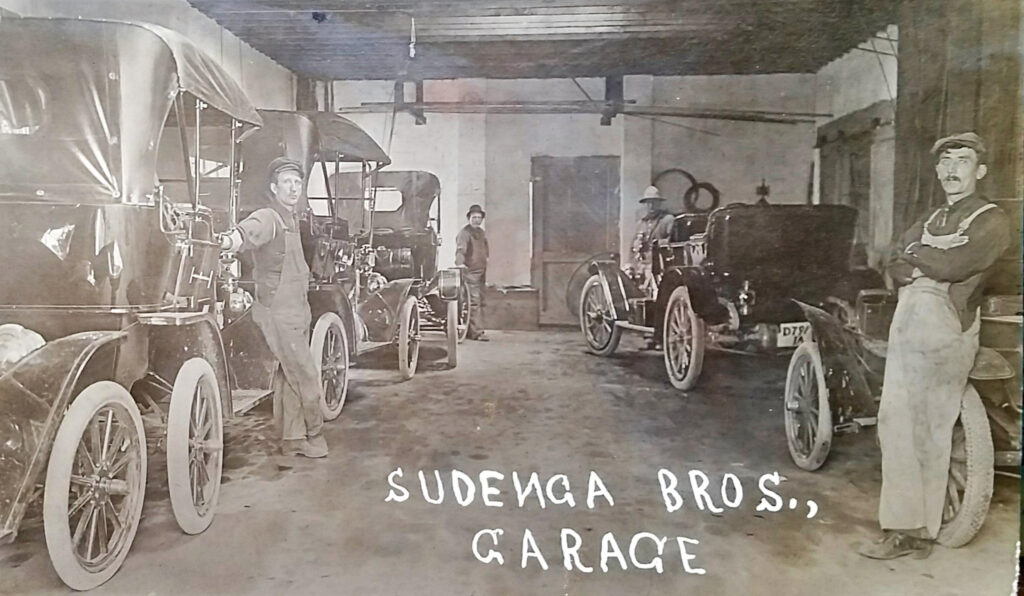
As the next generation stepped in, the business began to evolve beyond its blacksmith roots. By 1902, Folkert’s sons, George and Philip Sudenga, had taken over and renamed the business Sudenga Bros., continuing blacksmith work while expanding into manufacturing services. Always adapting to the needs of the time, they added new capabilities, including welding and even a Ford dealership, steadily growing the operation through changing agricultural demands and the challenges of the Depression years.
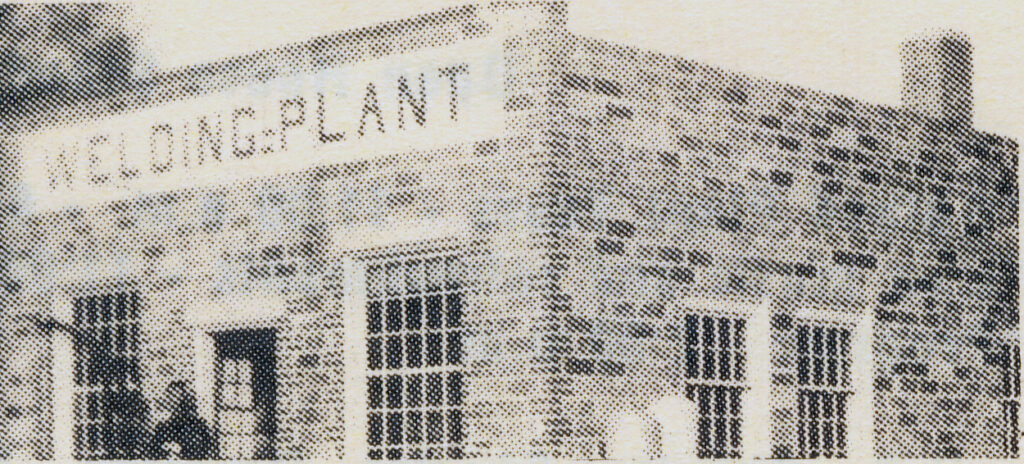
In 1920, Philip sold his interest in the automobile business to George and went on to establish his own operation, the Sudenga Welding Plant. His sons, Floyd and Jay Sudenga, grew up working alongside him, continuing the family’s hands-on approach. As Philip’s health declined, Floyd and Jay joined ownership in 1945. That same year, the business suffered a devastating fire. The Sudengas rebuilt, pushing forward with renewed focus and setting the stage for the company’s next phase.
- Leadership transitions from Folkert Sudenga to George and Philip, and then from Philip to Floyd and Jay
- Expansion beyond blacksmithing into welding, manufacturing, and a Ford dealership
- Rebuilt after the 1945 fire, setting the stage for future growth
Shift to Manufacturing
1945–1960s
Following the 1945 fire, the Sudengas rebuilt with renewed focus and quickly moved into manufacturing. At the request of a local salesman, Sudenga Bros. began producing a rear-end loader for the Ford Ferguson tractor. Its success led to a full transition into manufacturing in 1946, marking a defining shift in the company’s direction.
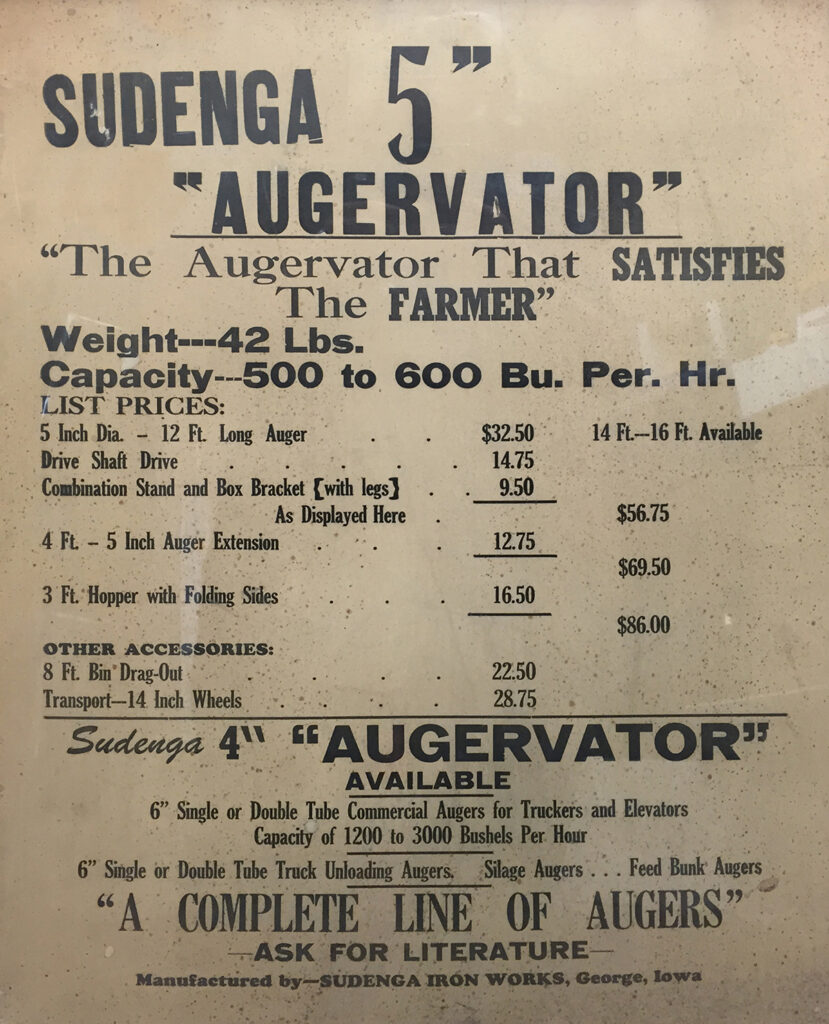
From there, product development was driven by real needs in the field. Early innovations focused on labor-saving solutions for farmers, including wagon components, corn picker blowers, and the introduction of the “Augerator” in 1950, designed to replace manual grain handling. As demand grew, so did capabilities. By the mid-1950s, operating as Sudenga Iron Works, the company expanded into transport augers and additional equipment for agriculture and commercial use.
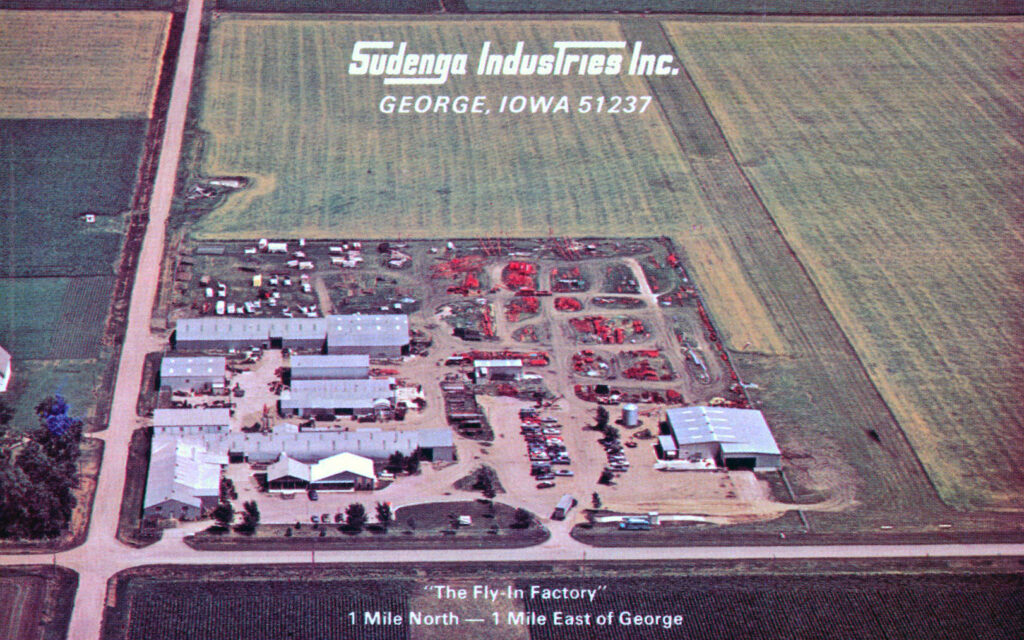
Growth continued into the late 1950s with the development of bulk feed bodies and increasing demand for larger equipment. As space became limited, a decision was made in 1958 to move operations to a new location one mile northeast of George. A new facility was constructed in 1959, bringing expanded production capacity and room for a growing workforce. In 1962, the company was incorporated as Sudenga Industries, reflecting its expanded scope and long-term direction.


- Transitioned to full manufacturing in 1946 following success of early equipment
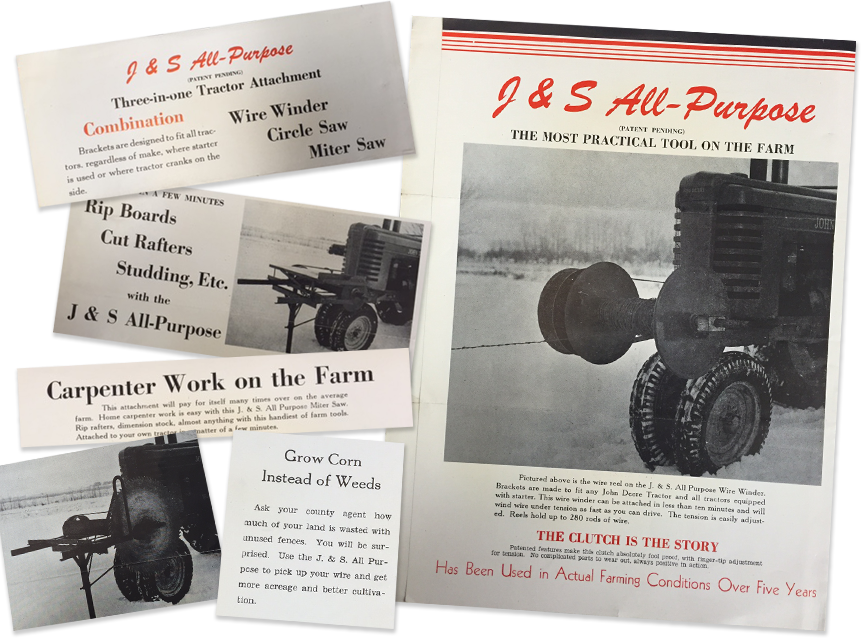
- Expanded capabilities through farmer-driven, labor-saving innovations
- Growth in the late 1950s with new facility and incorporation as Sudenga Industries
- Other innovations from this time period included wagon box tie-downs and an extra clutch for live power takeoff for Allis Chalmers tractors (for Dethmers Implement of Boyden, IA, 1947), corn picker blowers (1948), side wagon hitches for combines, an AC Augerator for Allis Combine (1949), standard wagon gears and E-Z Bak wagon gears (1951), as well as products like a “correspondence lift” for banks and offices and the Tattle Tale Mail Box Signal.
Carrying It Forward
1970s–1990s
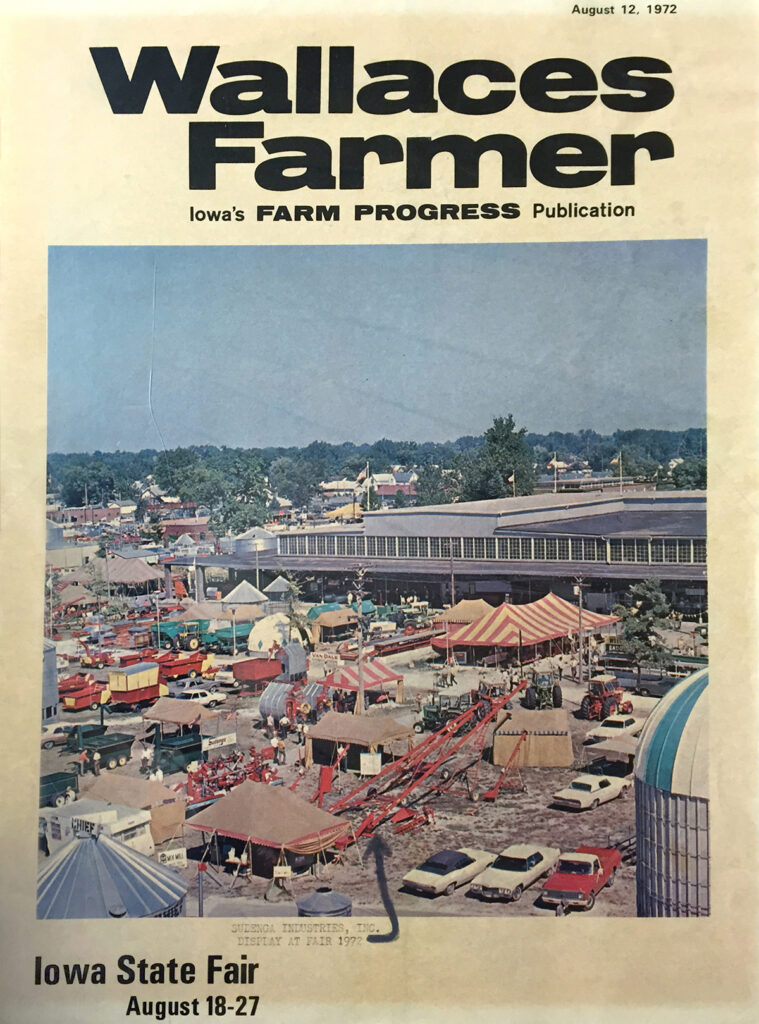
Through the 1970s, Sudenga continued to grow by building on its foundation in product development. As demand for grain, feed, and handling equipment increased, the company expanded its product lines to meet the needs of a changing agricultural industry. Even in the face of setbacks, including fires in 1970 and 1975, the business rebuilt each time, improving its facilities and strengthening operations.
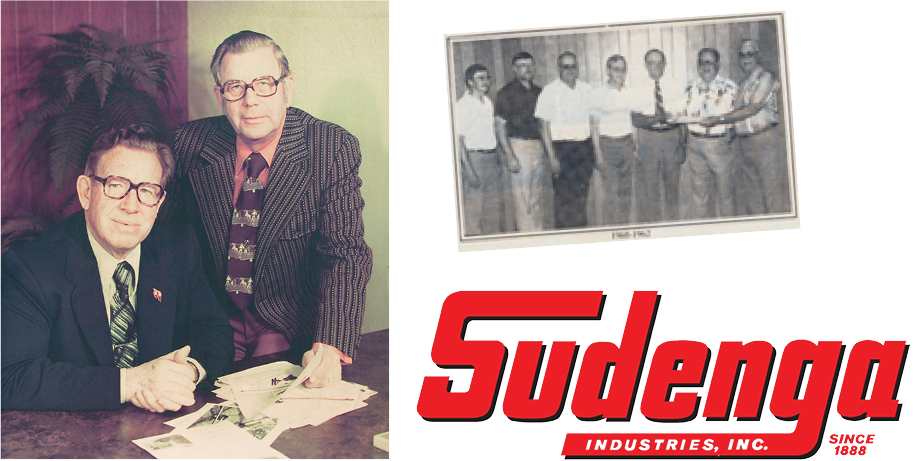
In 1976, after more than three decades of leadership, Floyd and Jay Sudenga retired. Ownership transitioned to a group of key employees, marking a new chapter while maintaining continuity in the company’s direction. With a deep understanding of the products and the customers they served, the team continued to grow the business, expanding capabilities and building one of the broadest product lines in the industry.
- Product lines expanded alongside a changing ag industry
- Rebuilt and improved facilities following fires in 1970 and 1975
- Ownership transitioned in 1976 to a group of longtime employees, maintaining continuity
Building for What’s Next
2000s–today
Building on decades of product development and steady growth, Sudenga entered the 2000s with an expanded product line and a strong position in the agricultural equipment industry. Continued investment in equipment, processes, and people allowed the company to increase capacity while maintaining the durability and reliability customers had come to expect.
As operations grew, so did the need for more efficient manufacturing. Improvements across engineering, fabrication, and assembly helped streamline production and support a wider range of products. Today, Sudenga is one of the largest employers in Lyon County, remaining privately owned with a team that continues to play a direct role in how equipment is designed, built, and improved.
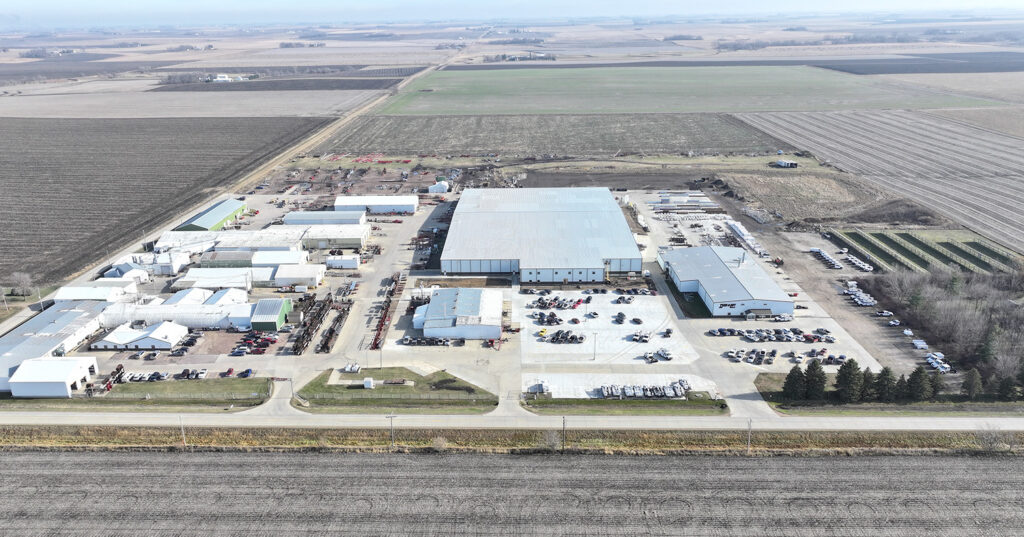
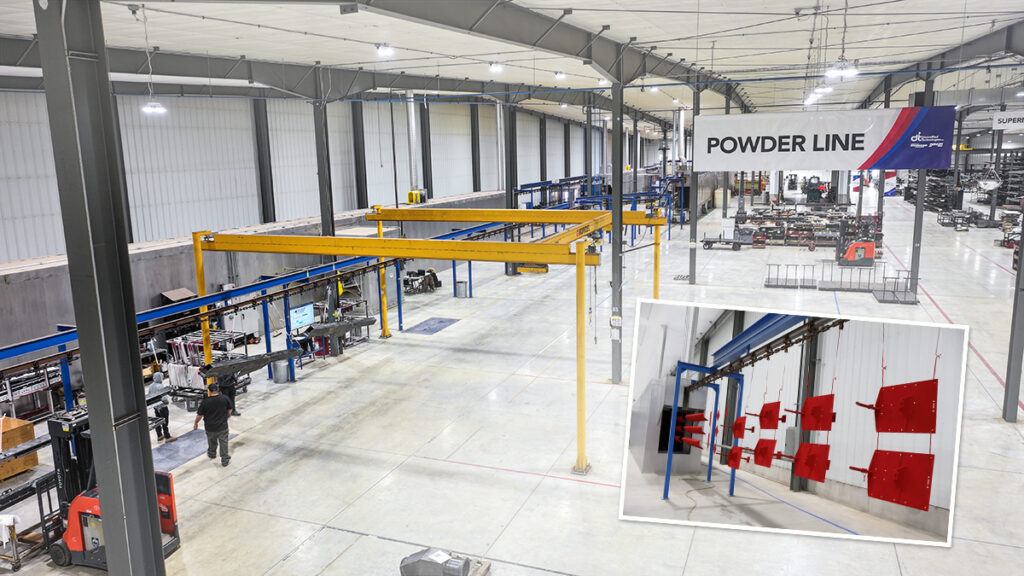
Recent investments, including the addition of a new 150,000 square foot manufacturing center and a state-of-the-art powder coating system, have further advanced Sudenga’s capabilities. With more than 350,000 square feet of manufacturing and warehouse space, the current location provides room for continued expansion as the company builds on its foundation and prepares for what’s next.

- Expanded product lines and capabilities
- Invested in facilities, equipment, and processes to increase efficiency and capacity
- Positioned for continued growth with a modern campus designed for expansion