Fine Grinding for Dairy: Why Hammermills Still Make Sense
Fine grinding plays an important role in dairy feed preparation. Learn how hammermills combine fine-grinding capability, ingredient flexibility, and straightforward maintenance to help dairy operations meet particle-size targets and daily production needs.
News / Fine Grinding for Dairy: Why Hammermills Still Make Sense
Dairy producers are constantly balancing feed costs, ration requirements, and production goals. One area that continues to receive attention from dairy nutritionists is corn particle size.
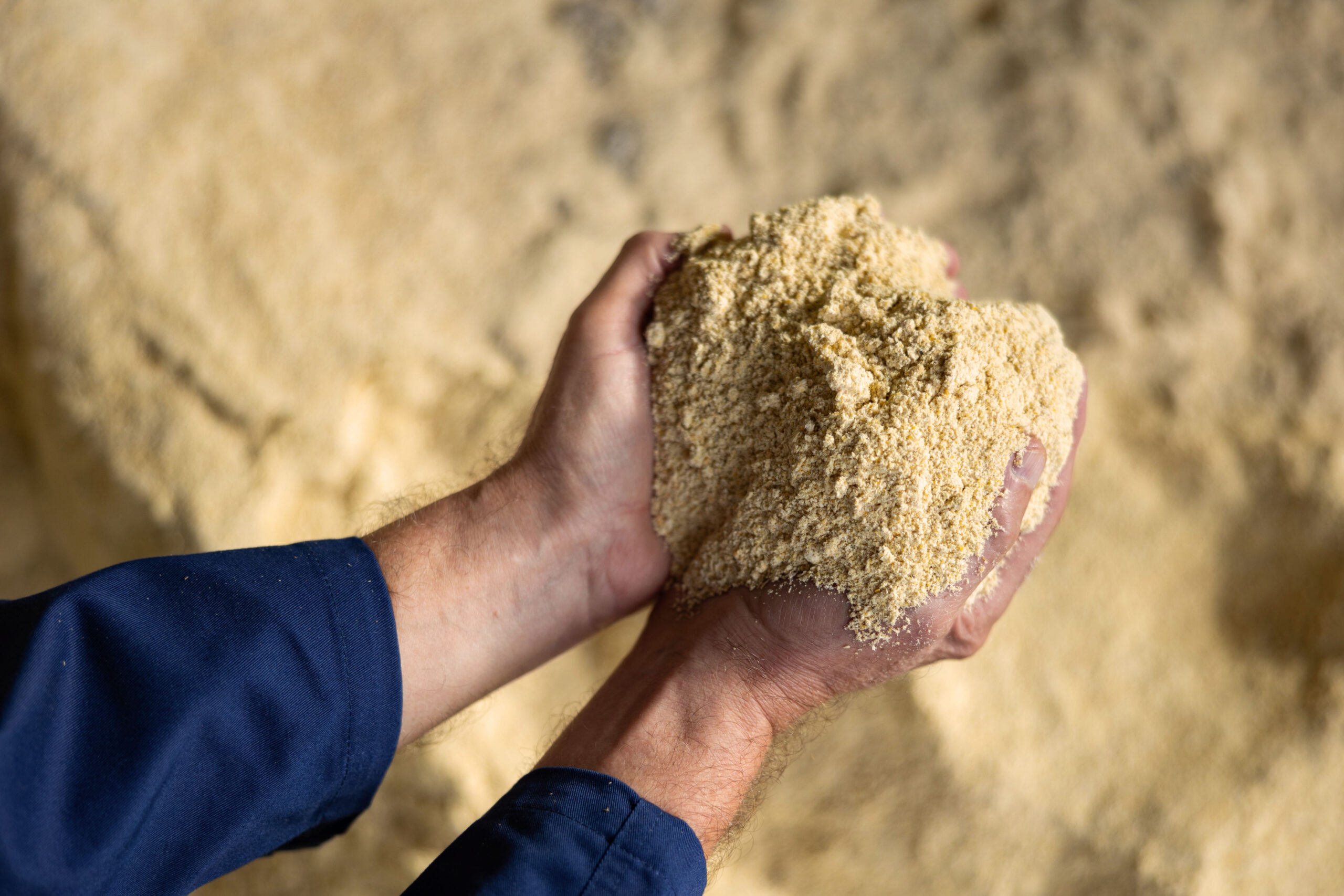
Reducing corn to a finer particle size increases the amount of grain surface area exposed to rumen microbes and digestive enzymes. Improved access to starch can help cows utilize more of the energy available in the feed. Research has shown that finely ground corn can improve starch digestibility, and studies have reported milk production advantages when feeding finely ground corn compared to coarser processing methods.
For dairy producers, the goal is to capture more nutritional value from every ton of feed by making more of the grain’s available energy accessible to the animal. The appropriate grind target depends on the overall ration and should be established with the operation’s nutritionist.
For operations whose nutritionists specify a finer grind target, the challenge becomes producing that particle size consistently while maintaining throughput, managing maintenance requirements, and controlling equipment costs.
That is where modern hammermill systems continue to offer value.
Fine grinding that fits the operation
Periodic particle-size testing helps operators confirm that the finished grind meets the nutritionist’s target and identify when adjustments or maintenance may be needed. Achieving a finer grind requires the right combination of equipment and configuration. Screen selection, hammer configuration, rotor diameter, tip speed, and airflow all influence hammermill grinding performance.
Matching these factors to the material being processed helps operators meet particle-size targets while supporting the daily capacity needs of the operation.
Versatility across feed ingredients
A grinding system’s value also depends on the range of ingredients it can process. Hammermills offer the flexibility to handle multiple grains and suitable fibrous feed ingredients through a single machine.
For operations processing more than corn, that versatility can reduce the need for separate equipment and accommodate changes in feed formulations. Ingredient characteristics and processing requirements help determine the appropriate mill configuration.
Designed for straightforward maintenance
Routine maintenance is an important part of maintaining grinding performance. Hammermill upkeep generally focuses on wear components such as screens and hammers, along with regular inspection and servicing. As hammers and screens wear, grinding performance can change. Monitoring their condition and replacing worn components helps maintain dependable results.
Accessible, replaceable wear components can simplify routine upkeep and help operators maintain the particle size and capacity their operation requires. For busy dairy operations, ease of service is an important consideration when selecting equipment.
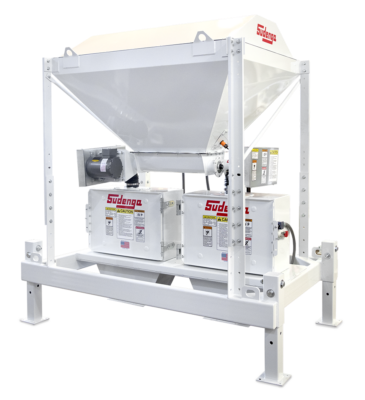
Double Hammermill Skid
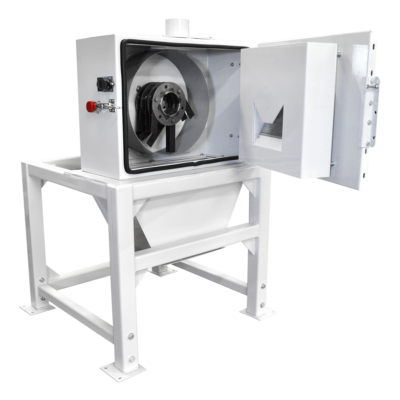
Liberator III Hammermill
Where Sudenga fits
Sudenga offers hammermill configurations and integrated grinding systems designed to help producers achieve fine-grind targets while meeting throughput and operational requirements.
The Liberator III Hammer Mill provides screen and motor options to match particle-size and capacity requirements. For operations needing additional grinding capacity, the Double Hammer Mill Skid combines two hammermills with a surge hopper, controlled feeding, and automated start and stop functions.
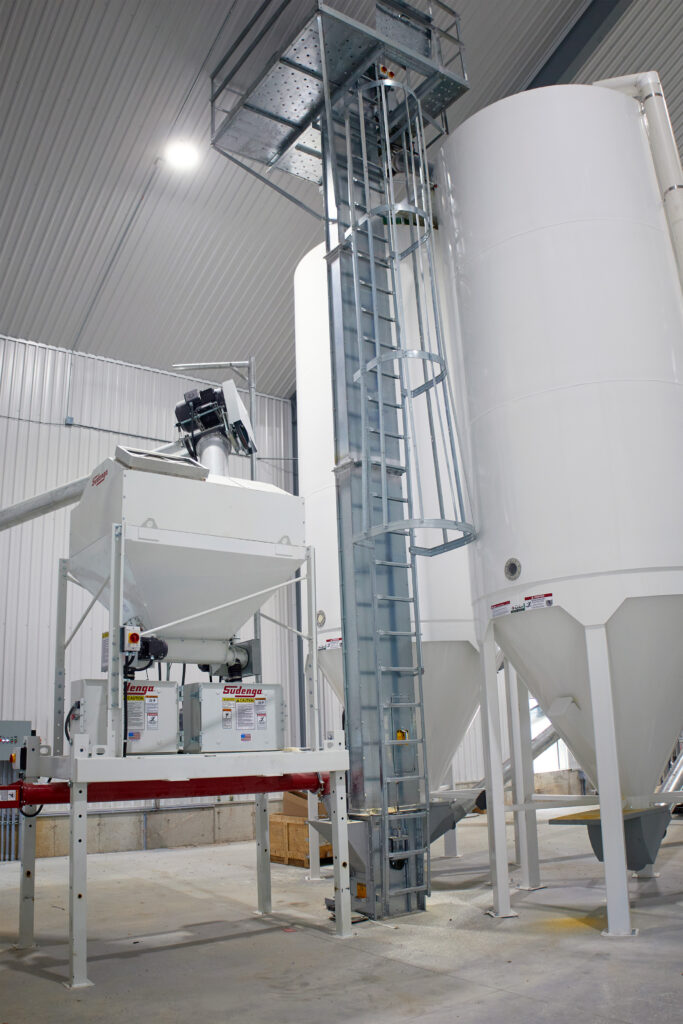
These options allow producers to incorporate grinding into an on-farm setup or a larger feed-processing system.
Choosing the right grinding system
For dairy producers evaluating grinding options, hammermills offer fine-grinding capability, ingredient flexibility, and straightforward maintenance. Matching the mill and system configuration to the required particle size and production capacity helps ensure the equipment fits the way the operation produces feed.
Contact Sudenga to discuss how the Liberator III Hammer Mill or Double Hammer Mill Skid could fit your feed-processing needs.