Bulk material container loading made simple
Sudenga container loaders provide an efficient way to load grain, feed ingredients, and other free-flowing bulk materials into 20- and 40-foot shipping containers.
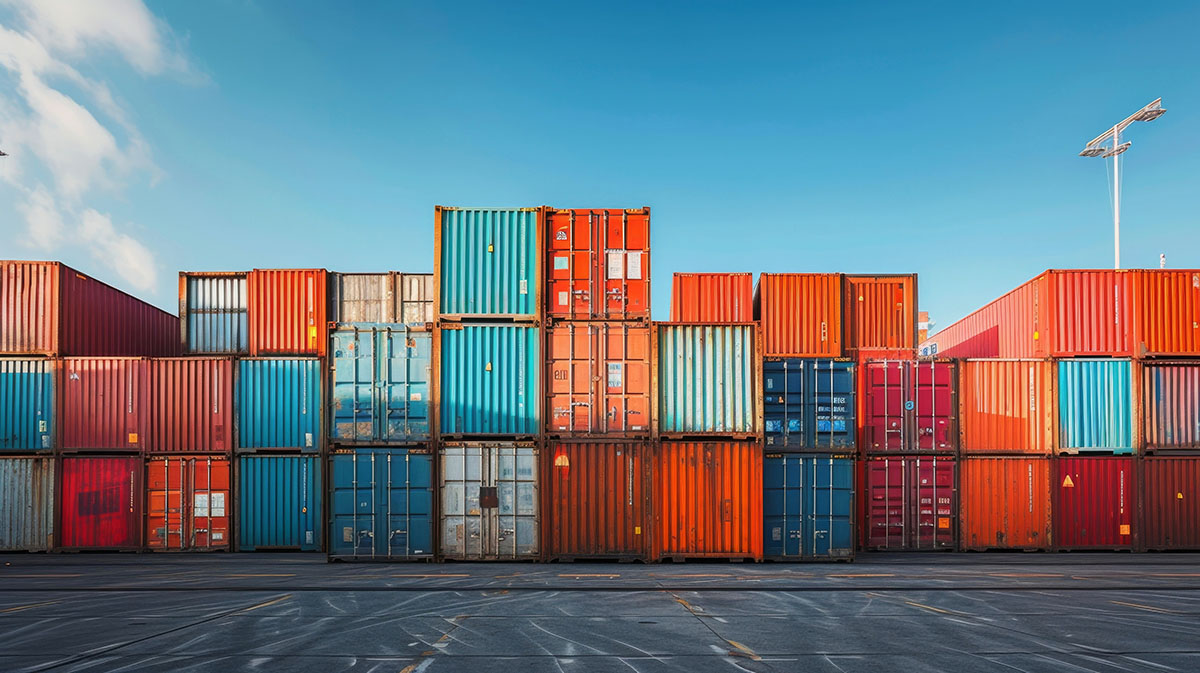
Sudenga container loaders provide an efficient way to load grain, feed ingredients, and other free-flowing bulk materials into 20- and 40-foot shipping containers.
Load grain, feed ingredients, and other free-flowing bulk materials into 20- and 40-foot shipping containers with a system configured for your operation. Sudenga container loaders offer belt or auger conveying, portable or stationary configurations, multiple inlet arrangements, and electric or hydraulic drive options. Each system can be configured around your material, existing equipment, available space, and desired capacity.
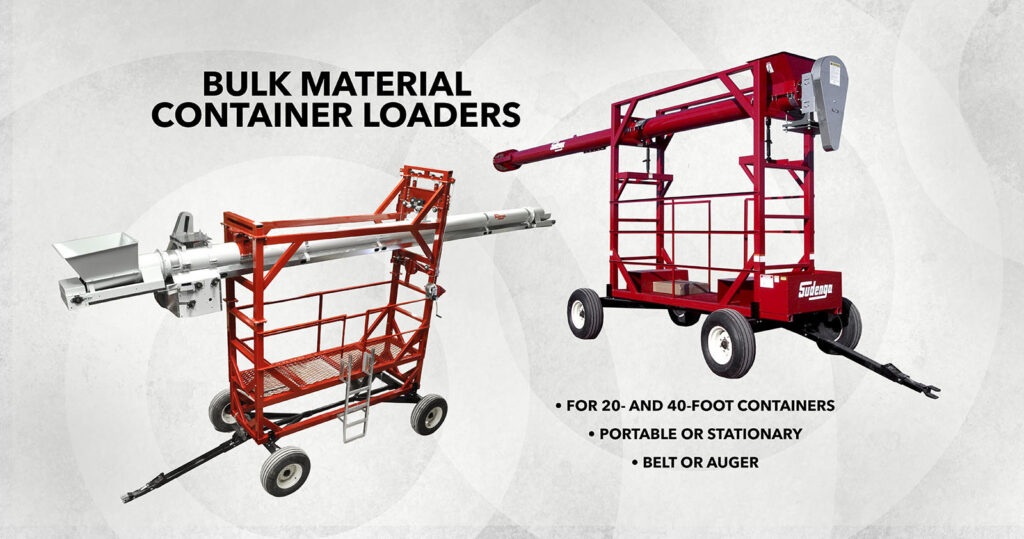
Sudenga container loaders are suitable for grain, DDGs, meals and malts, feed ingredients, feed pellets, plastic pellets, and other free-flowing granular materials. Additional applications can be evaluated based on the characteristics of the material being handled.
Belt-style container loaders
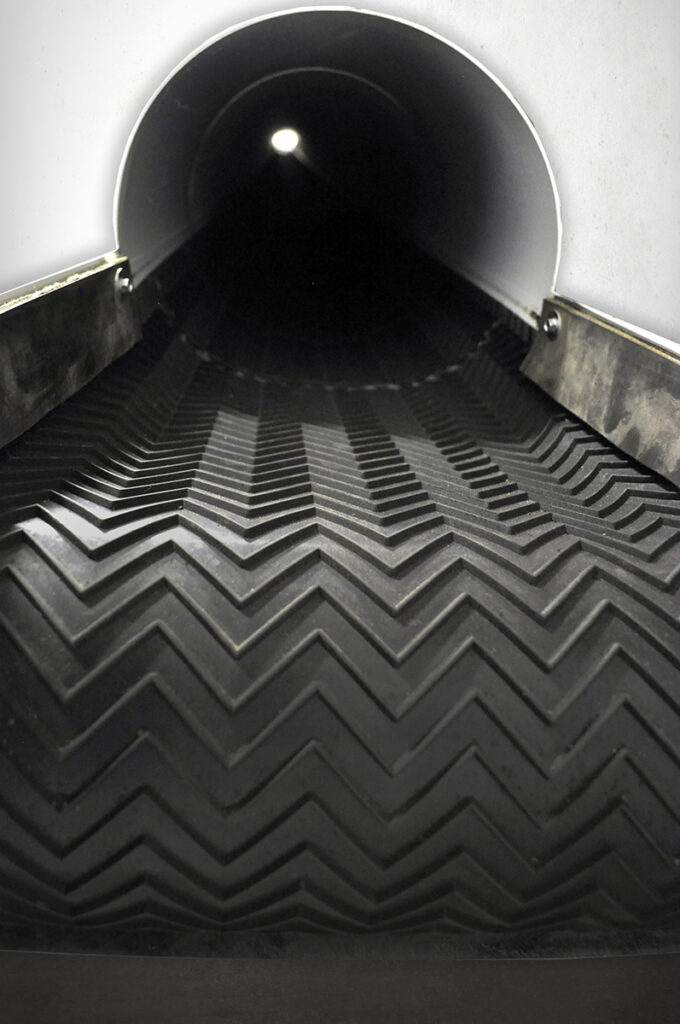
A belt conveyor provides gentler product handling, making it a strong choice for materials susceptible to damage or degradation. The 12-inch tube belt conveyor uses a 14-inch-wide belt that forms a cup inside the tube, helping contain material and minimize material working beneath the sides of the belt.
The 12-inch belt conveyor offers these capacities:
Auger-style container loaders
An auger conveyor provides a simple, economical container-loading solution for durable, free-flowing materials. The 12-inch auger offers capacities up to 4,242 CFH (3,410 BPH) at 180 RPM.
Capacities listed are maximum estimates. Actual throughput may vary with material characteristics, conveyor speed, feed conditions, and equipment configuration. BPH figures are approximate and based on U.S. dry bushels.

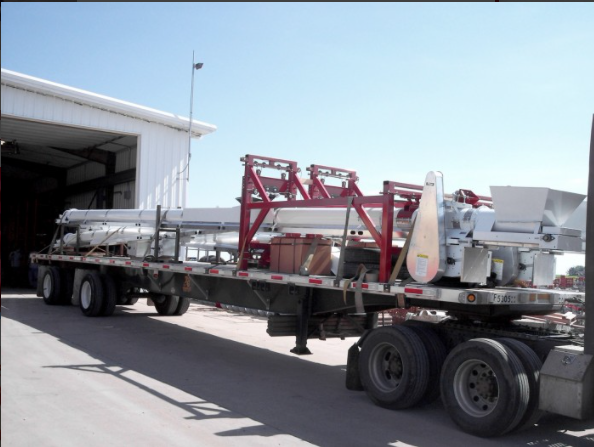
Portable units can be moved out of the way when they are not in use or transferred between multiple container-loading areas.
Stationary units are well suited for dedicated loading locations supplied by permanent equipment such as overhead surge tanks, bins, augers, or conveyors.
Container loaders can be configured to receive material from:
The appropriate inlet arrangement depends on how material reaches the loading area, the equipment already on site, and the desired loading workflow.
The support structure allows for side-to-side positioning of the discharge end. This adjustment helps operators distribute material more effectively across the container, maximizing the available fill space.
Available options include:
Contact Sudenga to discuss your material, target capacity, container size, loading method, power requirements, and available space.
How could a container loader fit your operation? Use the calculator below for estimated loading times for 20- and 40-foot shipping containers. Select a conveyor capacity, then adjust the material density and payload weight to match your application.
Results are estimates only, not guaranteed loading times. Calculations assume continuous material flow; actual times will vary with operating conditions. Allow additional time for setup, positioning, interruptions, and final filling.
Cubic feet per hour. Editing this value selects a custom rate.
Use the density of the material you plan to load.
Payloads are editable assumptions, not container ratings. Use your approved cargo weight limits.
Loading times assume continuous flow at the entered rate. Allow additional time for positioning, setup, interruptions, and final filling. This estimate does not verify available container volume or safe loading limits.